.jpg)
Ayurveda, Yoga, Pranayama and Supportive Care for Young Children with ADHD.

Updated: Sep 18
A Simple Guide for Parents of Children Ages 4–7
:Prepared by The Vitality Source
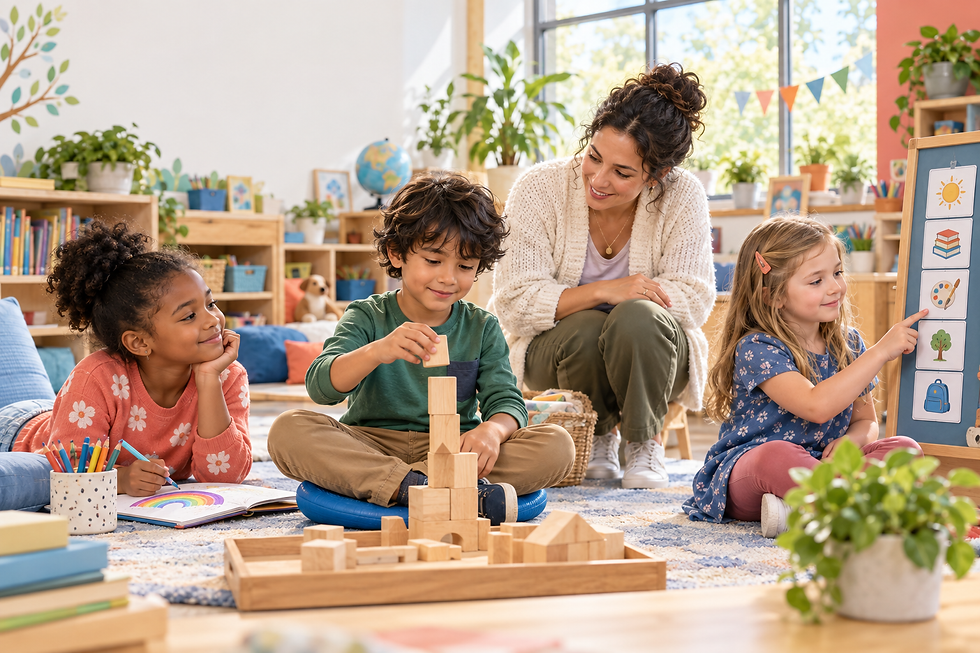
A gentle, practical approach to routines, movement, breathing and family wellbeing
1. Understanding ADHD in Young Children
ADHD can affect a child's ability to:
Stay focused on an activity
Remember instructions
Wait for a turn
Control impulses
Move from one activity to another
Organize simple tasks
Manage strong emotions
Sit for activities that require attention
Every child is different.
One child may be constantly moving or climbing. Another may seem dreamy and easily distracted. Some children experience both.
It is also important to remember that a four-year-old naturally has less self-control and attention than a seven-year-old.
The goal is not to make a child perfectly still or quiet.
The goal is to help the child participate more comfortably in:
Family life
School
Play
Friendships
Mealtimes
Sleep routines
Everyday activities
ADHD is not caused by bad parenting, laziness or a lack of discipline.
Children with ADHD may need more external structure, repetition and support while they develop these skills.
2. What Parents Can Focus on First
Before introducing complicated therapies, supplements or restrictive diets, focus on the basics.
For many young children, the most useful starting points are:
Predictable routines
Children often do better when they know what is happening next.
Adequate sleep
Poor sleep can make attention, behavior and emotions more difficult.
Regular meals and snacks
Hunger can make self-regulation harder.
Daily physical activity
Children need opportunities to run, climb, dance, walk and play.
Short, clear instructions
Give one instruction at a time instead of several instructions together.
Visual reminders
Pictures, simple charts and timers can reduce the amount of information a child has to remember.
Calm transitions
Give the child warning before changing activities.
For example:
“Two more minutes of play, then we put our shoes on.”
These simple changes often matter more than adding numerous therapies at the same time.
3. Where Ayurveda May Fit
Ayurveda is a traditional Indian system of health that looks at daily routines, food, movement, rest and individual patterns.
Parents may hear Ayurvedic terms such as:
Vata
Pitta
Kapha
Agni
Dinacharya
These are traditional Ayurvedic concepts. They should not be treated as modern medical diagnoses.
For example, an Ayurvedic practitioner may describe restlessness or irregular routines through a “Vata” framework.
This can be useful as a way of thinking about the child's environment, but it does not mean that ADHD is caused by an imbalance that can simply be corrected.
A more useful approach is to ask:
Does my child become more unsettled when tired?
Does hunger affect behavior?
Are mornings rushed?
Are transitions difficult?
Does too much noise overwhelm my child?
Does my child function better with a predictable routine?
Which environments make my child feel calm and secure?
These questions can help parents make practical changes without placing another label on the child.
4. The Most Useful Ayurvedic Principle: Daily Routine
One of the simplest Ayurvedic concepts for families is Dinacharya, or daily rhythm.
Children with ADHD may have difficulty remembering sequences and judging time.
A visual routine can make everyday activities easier.
Morning Example
Use the toilet
Get dressed
Eat breakfast
Put on shoes
Bedtime Example
Wash or bathe
Put on pajamas
Read a story
Lights out
Use pictures if necessary.
The visual schedule is there to help the child's memory, not to test the child.
Consistency does not mean that every day must be perfect.
Families travel. Children get sick. School schedules change.
Try to keep the general order familiar whenever possible.
5. Helping With Difficult Transitions
Changing from one activity to another can be difficult for a young child with ADHD.
Instead of repeatedly saying:
“Come on, hurry up! We need to go!”
try:
“Two more turns, then shoes.”
A timer or picture card may also help.
Some children benefit from movement before sitting down.
Examples include:
Walking like an animal
Carrying a light basket
Stretching
Pushing hands gently against a wall
Marching
Dancing for a minute
Movement should not be treated as a reward that the child only receives after perfect behavior.
For many children, movement is something they need in order to participate successfully.
6. Warmth, Comfort and Gentle Touch
Ayurvedic traditions often value warmth, gentle touch and calming sensory experiences.
For a young child, this could mean:
A warm bath
Comfortable clothing
A familiar blanket
A quiet bedtime routine
A gentle hand or foot massage from a parent
Always respect the child's preference.
Some children enjoy touch. Others do not.
Ask first and stop if the child pulls away or becomes uncomfortable.
Massage should be used for comfort and connection, not as a treatment to remove toxins or cure ADHD.
If oil is used, choose a simple product that the child has previously tolerated.
Avoid:
Hot oils
Strong essential oils
Heavily fragranced products
Broken or inflamed skin
Products containing known allergens
7. Food and Mealtimes
Young children need enough calories and nutrients for growth.
The goal should be regular, balanced and pleasant meals, rather than a complicated “ADHD diet.”
Try to provide:
Regular breakfast
Predictable meals and snacks
Fruits and vegetables
Whole grains where appropriate
Protein-containing foods
Healthy fats
Water throughout the day
Avoid unnecessarily removing large groups of foods such as dairy, gluten, grains or fruit without medical guidance.
Restrictive diets can make it harder for young children to receive enough nutrients.
If your child is:
Losing weight
Extremely selective with food
Growing poorly
Frequently constipated
Having ongoing diarrhea
Experiencing abdominal pain
speak with your pediatrician or dietitian.
8. Yoga for Children With ADHD
Yoga can give children an enjoyable way to practice:
Movement
Balance
Coordination
Body awareness
Following simple instructions
Slowing down briefly
Moving between activity and rest
For children ages four to seven, yoga should feel like play, not a formal adult yoga class.
A child does not need perfect posture.
A child may:
Participate for one minute
Watch for a while
Do one pose
Move around
Return later
That can still be successful.
Keep Sessions Short
Start with around 5–10 minutes.
Two or three short sessions each week may be easier than one long session.
Ordinary active play should still happen every day.
Good Principles for Young Children
Demonstrate more and explain less.
Use stories and imagination.
Give two choices.
Alternate active and quiet movements.
Use a wall or chair for balance.
Praise effort rather than perfect posture.
Allow the child to stop.
Instead of saying:
“Stand correctly in Tadasana.”
try:
“Can you grow tall like a mountain?”
9. A Simple 10-Minute Yoga Story
This is an example that families can shorten or change.
1. Arrive – 30 seconds
Stand or sit comfortably.
Ask the child to notice:
Their feet
Their hands
One sound in the room
The child does not need to close their eyes.
2. Move – 2 minutes
Try:
Marching
Reaching upward
Shaking the hands
Slow animal walks
3. Mountain
Stand comfortably.
Reach the arms upward if comfortable.
Take approximately three natural breaths.
4. Cat and Cow
On hands and knees, gently round and relax the back.
Try four to six easy movements.
5. Star
Open the arms and legs comfortably.
Reach gently from side to side.
6. Supported Tree
Keep the toes of one foot on the floor.
Place the heel near the opposite ankle.
The child can hold a wall or parent.
Switch sides.
7. Short Rest
Rest for about 30–60 seconds.
The child can:
Lie down
Sit against a wall
Curl onto their side
8. Finish
End with a gentle stretch.
Let the child choose:
High five
Bow
Quiet wave
The purpose is to create a positive movement experience—not to demand stillness.
10. Yoga Practices to Avoid in Young Children
Young children should not be pushed into advanced yoga positions.
Avoid:
Headstands
Shoulder stands
Deep backbends
Full lotus
Painful stretching
Competitive yoga challenges
Hot yoga
Difficult partner acrobatics
Never force a child's body into position.
Children with significant medical conditions, injuries, seizures, heart or lung conditions, fainting episodes or joint problems may need individual medical guidance before participating.
11. Gentle Breathing or Pranayama
Pranayama is the yogic practice of working with the breath.
Traditional pranayama includes many advanced techniques.
For a child aged four to seven, keep breathing exercises very gentle and playful.
Do not expect breathing to stop a meltdown.
Instead, practice breathing when the child is already calm.
This makes the activity familiar and enjoyable.
Belly Buddy
Place a light stuffed toy on the child's belly while the child lies comfortably.
Watch the toy gently rise and fall for three to five normal breaths.
Do not ask the child to take extremely large breaths.
Smell the Flower, Cool the Soup
Pretend to gently smell a flower.
Then slowly “cool the soup” with an easy exhale.
One to three rounds is enough.
Humming
Ask the child to make a gentle humming sound while breathing out.
Keep it easy and comfortable.
Hand-Tracing Breath
Trace upward along a finger while breathing in naturally.
Trace downward while breathing out.
The child does not have to complete all five fingers.
12. Breathing Practices Young Children Should Avoid
Avoid:
Long breath holding
Breath-holding competitions
Kapalabhati
Bhastrika
Very rapid breathing
Forceful pumping breaths
Strong or complicated alternate-nostril practices
Anything that causes dizziness or distress
Stop immediately if the child develops:
Dizziness
Wheezing
Difficulty breathing
Chest pain
Tingling
Unusual sleepiness
Significant distress
Children with asthma, recurrent wheezing, seizures, fainting, heart problems or respiratory illness should receive appropriate medical guidance.
13. What About Panchakarma?
Parents may hear Panchakarma described as an Ayurvedic cleansing or detoxification process.
Traditional Panchakarma may include procedures such as:
Therapeutic vomiting
Purgation
Medicated enemas
Nasal preparations
Blood-removal procedures
Fasting
Internal oils
Heat treatments
These approaches are not recommended in this guide as routine ADHD care for children aged four to seven.
Young children are more vulnerable to:
Dehydration
Electrolyte imbalance
Aspiration
Infection
Injury
Medication interactions
Parents should not perform Panchakarma cleansing procedures at home.
14. A Gentler Interpretation of Restoration
Families who appreciate the restorative philosophy behind Ayurveda can create a gentle “reset” without cleansing procedures.
For example:
Have a quiet evening
Give the child a warm bath
Serve familiar nourishing food
Reduce unnecessary stimulation
Use comfortable clothing
Offer a gentle massage if the child enjoys it
Follow a calm bedtime routine
Make sure the child receives adequate sleep
These practices may support comfort and connection.
They should not be described as removing toxins or curing ADHD.
15. Herbs and Ayurvedic Supplements
Parents may hear about herbs traditionally associated with memory or mental wellbeing, including:
Brahmi or Bacopa
Ashwagandha
Shankhpushpi
Jatamansi
Vacha
This guide does not recommend starting these products on your own.
There is not enough evidence to routinely recommend these products for ADHD in children aged four to seven.
Supplements may:
Interact with medications
Cause allergic reactions
Affect digestion
Cause sleepiness or stimulation
Vary in strength and purity
Some Ayurvedic products have also been found to contain potentially harmful levels of metals such as lead, mercury or arsenic.
Before considering any supplement, show the exact product and ingredient label to your child's:
Pediatrician
Pharmacist
“Natural” does not automatically mean safe for a child.
16. Sleep Matters
Good sleep supports:
Attention
Memory
Mood
Behavior
Physical health
Children ages three to five generally need around 10–13 hours of sleep in a 24-hour period, including naps.
Children ages six to twelve generally need around 9–12 hours.
Helpful habits include:
Consistent bedtime
Consistent wake-up time
Quiet bedtime routine
Comfortable sleeping environment
Reducing stimulating media near bedtime
Keeping devices outside the bedroom when possible
Speak with a healthcare professional if your child has:
Frequent loud snoring
Pauses in breathing
Very restless sleep
Frequent waking
Significant daytime sleepiness
Sleep problems can sometimes look like or worsen attention difficulties.
17. Movement Matters
Young children need active play every day.
Movement can include:
Running
Dancing
Playground activities
Walking
Swimming with appropriate supervision
Cycling with appropriate safety equipment
Climbing safely
Yoga
Yoga is only one option.
If your child dislikes yoga, choose another type of movement.
Some children may concentrate better after active play followed by a short cool-down.
18. Digital Media
Screens do not need to be treated as the cause of ADHD.
However, excessive or poorly timed media can interfere with:
Sleep
Outdoor play
Family communication
Physical activity
Transitions
Parents can focus on practical boundaries:
Keep devices away from bedtime where possible.
Give clear warnings before screen time ends.
Avoid very stimulating content immediately before difficult transitions.
Choose content intentionally.
Make sure screens are not replacing sleep, movement or family time.
The goal is balance rather than guilt.
19. A Simple Four-Week Family Plan
Instead of changing everything at once, introduce one layer at a time.
Week 1: Understand the Pattern
Choose one difficult part of the day.
For example:
Getting dressed
Leaving the house
Beginning homework
Dinner
Bedtime
For seven days, briefly record:
What happened beforehand
How many reminders were needed
How long the activity took
What seemed to help
Use neutral language.
Instead of:
“My child was completely out of control.”
write:
“My child needed four reminders and left the table twice.”
Create one simple picture routine with no more than four steps.
Do not add supplements, restrictive diets or cleanses.
Parent's Job
Provide structure and observe.
Child's Job
Help choose pictures and participate without pressure.
Teacher's Job
Observe one classroom activity and use one simple support.
Week 2: Add Playful Movement
Introduce approximately 5–10 minutes of simple yoga about three times during the week.
Choose a time when the child is not:
Extremely hungry
Tired
Rushed
Upset
Let the child choose one or two poses.
Keep the activity enjoyable.
A teacher may also introduce a one-minute whole-class movement break.
Observe what happens afterwards.
Does the child:
Transition more easily?
Become more excited?
Show no noticeable change?
All three answers provide useful information.
Week 3: Add Gentle Breathing and Improve Sleep
Choose one breathing game:
Belly buddy
Gentle humming
Hand tracing
Smell the flower/cool the soup
Practice for approximately one minute when the child is calm.
Next, look at sleep.
Choose one realistic improvement.
For example:
Begin bedtime 15 minutes earlier.
Keep wake-up time more consistent.
Turn stimulating media off earlier.
Make the bedtime sequence more predictable.
Avoid changing many things at the same time.
Week 4: Review What Actually Helped
Look back at the same challenge you observed during Week 1.
Ask:
Does my child need fewer reminders?
Is the transition easier?
Is bedtime smoother?
Does my child enjoy the yoga?
Does breathing feel comfortable?
Has the teacher noticed anything useful?
Has anything made the child more upset or uncomfortable?
Keep what works.
Remove what creates unnecessary stress.
A useful routine may take five minutes rather than twenty.
More treatment is not automatically better.
20. How to Measure Progress
Avoid vague goals such as:
“Balance the doshas.”
Instead, choose something you can actually observe.
For example:
Bedtime
How many reminders does my child need to begin?
Morning
Can my child complete the first two steps of the routine?
School
Can my child begin the first instruction after a movement break?
Transitions
How long does it take to move from play to another activity?
Emotions
How long does recovery take after a difficult moment?
Track one or two goals for several weeks.
Small improvements can be meaningful.
21. The Role of Each Person
The Child
The child's role is to:
Participate when comfortable
Choose between safe options
Tell adults when something hurts or feels unpleasant
Stop when necessary
Success means the child feels safe and has some choice.
The Parent
The parent's role is to:
Create predictable routines
Give short instructions
Encourage rather than force
Observe changes
Communicate with professionals
The Teacher
The teacher can:
Use visual reminders
Break instructions into smaller steps
Schedule movement opportunities
Observe classroom functioning
Share feedback with parents
The Healthcare Team
Healthcare professionals should:
Assess ADHD appropriately
Review treatments
Monitor medication where necessary
Check growth, sleep and side effects
Review supplements and products
The Yoga or Ayurvedic Practitioner
The practitioner should:
Stay within their professional training
Use age-appropriate methods
Respect the child's refusal
Avoid cure claims
Communicate with the child's medical team when appropriate
22. When Parents Should Seek Medical Advice
Talk with your child's healthcare professional if you notice:
Persistent sleep difficulties
Loud snoring or breathing pauses
Poor growth
Weight loss
Significant appetite changes
Ongoing stomach problems
Frequent dizziness
Exercise intolerance
New or worsening behavioral concerns
Possible medication side effects
Seek urgent medical help for:
Serious breathing difficulty
Fainting
Seizure
Severe dehydration
Persistent vomiting
Suspected poisoning
Severe allergic reaction
Difficulty waking the child
23. Questions Parents Can Ask Their Child's Doctor
You may want to ask:
Has my child had a complete ADHD assessment?
Could sleep, hearing, vision, anxiety or learning difficulties be contributing?
What treatments have the strongest evidence for my child's age?
Are there any movement or breathing activities we should avoid?
Should we monitor appetite, weight, growth, sleep or blood pressure?
Can you review any Ayurvedic supplement we are considering?
Which symptoms should make us stop an activity or call you?
24. Questions to Ask an Ayurvedic or Yoga Practitioner
Ask:
What training do you have working with young children?
Have you worked with neurodivergent children?
How do you respond when a child says no?
Which practices do you avoid for children aged four to seven?
How do you adapt activities for medical or sensory conditions?
Will you communicate with our child's healthcare team?
What benefit are you expecting?
How will we measure whether the activity is helping?
Be cautious if someone:
Promises to cure ADHD
Guarantees academic improvement
Says your child needs to “detox”
Tells you to stop prescribed medication
Discourages communication with your pediatrician
Recommends numerous supplements at once
Frequently Asked Questions
Can Ayurveda cure ADHD?
Current evidence does not show that Ayurveda cures ADHD.
Ayurvedic lifestyle ideas may support routines, meals, sleep and family wellbeing, but they should be used as supportive practices.
Can yoga help?
Yoga may help some children enjoy movement, practice body awareness and move between activity and rest.
Research in children with ADHD is promising but still limited.
Yoga should be considered a supportive activity rather than a replacement for established treatment.
How long should a young child do yoga?
Start with approximately 5–10 minutes.
Two or three short sessions each week can be enough to begin.
Daily active play is still important.
Which breathing technique is best for ADHD?
There is no pranayama technique proven to be “best” for ADHD in young children.
Use very gentle breathing games.
Avoid forceful breathing and breath holding.
Should my child take Brahmi or Ashwagandha?
Do not start herbs without having the exact product reviewed by your child's pediatrician and pharmacist.
Products vary, and pediatric safety, dosing and interactions need careful consideration.
Can massage help?
Gentle massage may provide comforting parent-child time if the child enjoys touch.
It has not been established as a treatment for ADHD.
Is Panchakarma recommended?
Classical Panchakarma cleansing practices are not recommended in this guide as ADHD treatment for children aged four to seven.
Young children require much stronger safety precautions than adults.
Should medication be changed on yoga days?
No.
Medication should only be changed when your child's prescriber recommends a change.
What if yoga makes my child more active?
That can happen.
Try:
Shorter sessions
Less stimulating poses
Practicing earlier in the day
Outdoor movement followed by a quiet activity
If yoga repeatedly creates stress or conflict, choose another activity.
Quick Parent Checklist
Every Day
✓ Keep waking and bedtime reasonably predictable.✓ Offer regular meals, snacks and water.✓ Give one instruction at a time.✓ Include active play.✓ Use visual routines when useful.✓ Give warnings before transitions.✓ Protect sleep from unnecessary screen use.
Yoga and Breathing
✓ Keep activities short and playful.✓ Supervise the child.✓ Allow the child to stop.✓ Use comfortable positions.✓ Keep breathing natural and easy.✓ Stop with pain, dizziness or breathing difficulty.
Supplements and Ayurvedic Procedures
✓ Discuss supplements with the pediatrician and pharmacist.✓ Check every ingredient.✓ Avoid products making cure claims.✓ Do not perform Panchakarma cleansing at home.✓ Do not use fasting, vomiting, purging or restrictive diets as ADHD treatment.✓ Never change prescribed medication without medical advice.
Final Message for Parents
Supporting a young child with ADHD does not require turning every moment of family life into therapy.
Often the most useful support begins with simple things:
A predictable morning
Regular meals
Enough sleep
Time to run and play
Clear instructions
A picture routine
Five minutes of playful yoga
One easy breathing game
A calm bedtime
Supportive adults working together
Ayurveda and yoga can contribute gentle ideas to this environment when they are used carefully and honestly.
The goal is not to make a child unusually quiet or perfectly controlled.
The goal is to help the child feel safe, supported, understood and increasingly capable of participating in everyday life.
When parents, teachers, healthcare professionals and appropriately trained traditional practitioners communicate with one another, complementary practices can remain a supportive part of a broader, child-centered care plan.
Important Safety Note
This guide is educational. It does not diagnose ADHD, prescribe treatment, or replace care from a pediatrician, child psychiatrist, psychologist, licensed therapist, pharmacist, dietitian, occupational therapist, or school team. ADHD is a neurodevelopmental condition that requires a careful assessment across settings. Sleep problems, anxiety, learning differences, hearing or vision problems, trauma, and other conditions can look similar to ADHD. A qualified healthcare professional should evaluate concerns before a family assumes that ADHD is the cause.[1][2]
Ayurveda, yoga, and pranayama are presented here as optional supportive practices. They should sit alongside, not instead of, evidence-based ADHD care. No parent should stop, reduce, or change prescribed medication or behavioral treatment because of this guide. Panchakarma procedures and herbal products are not home remedies for young children. The most intensive Panchakarma methods are outside the scope of routine family wellness and should not be used for ADHD in a child aged four to seven without direct oversight from the child’s licensed medical team and a properly trained pediatric Ayurvedic clinician.
References
Centers for Disease Control and Prevention. Treatment of ADHD. Updated July 2026.
National Institute of Mental Health. Attention-Deficit/Hyperactivity Disorder: What You Need to Know.
Cohen SCL, Harvey DJ, Shields RH, et al. The Effects of Yoga on Attention, Impulsivity and Hyperactivity in Preschool-Age Children with ADHD Symptoms. Journal of Developmental & Behavioral Pediatrics. 2018.
Jensen PS, Kenny DT. The Effects of Yoga on the Attention and Behavior of Boys with Attention Deficit Hyperactivity Disorder. Journal of Attention Disorders. 2004.
Gonzalez NA, et al. A Systematic Review of Yoga and Meditation for ADHD in Children. Cureus. 2023.
NIH Office of Dietary Supplements. Dietary Supplements: What You Need to Know.
National Center for Complementary and Integrative Health. Ayurvedic Medicine: In Depth.
National Center for Complementary and Integrative Health. Yoga: Effectiveness and Safety.
National Capital Poison Center. Poison Control.
Centers for Disease Control and Prevention. About Sleep.
American Academy of Pediatrics. Media and Children.
Wolraich ML, et al. Clinical Practice Guideline for the Diagnosis, Evaluation, and Treatment of ADHD in Children and Adolescents. Pediatrics. 2019.
Manjunath I, et al. A Systematic Review of Yoga as a Supportive Treatment for Children with ADHD. 2024.
The Vitality Source. About and Services.


Comments